
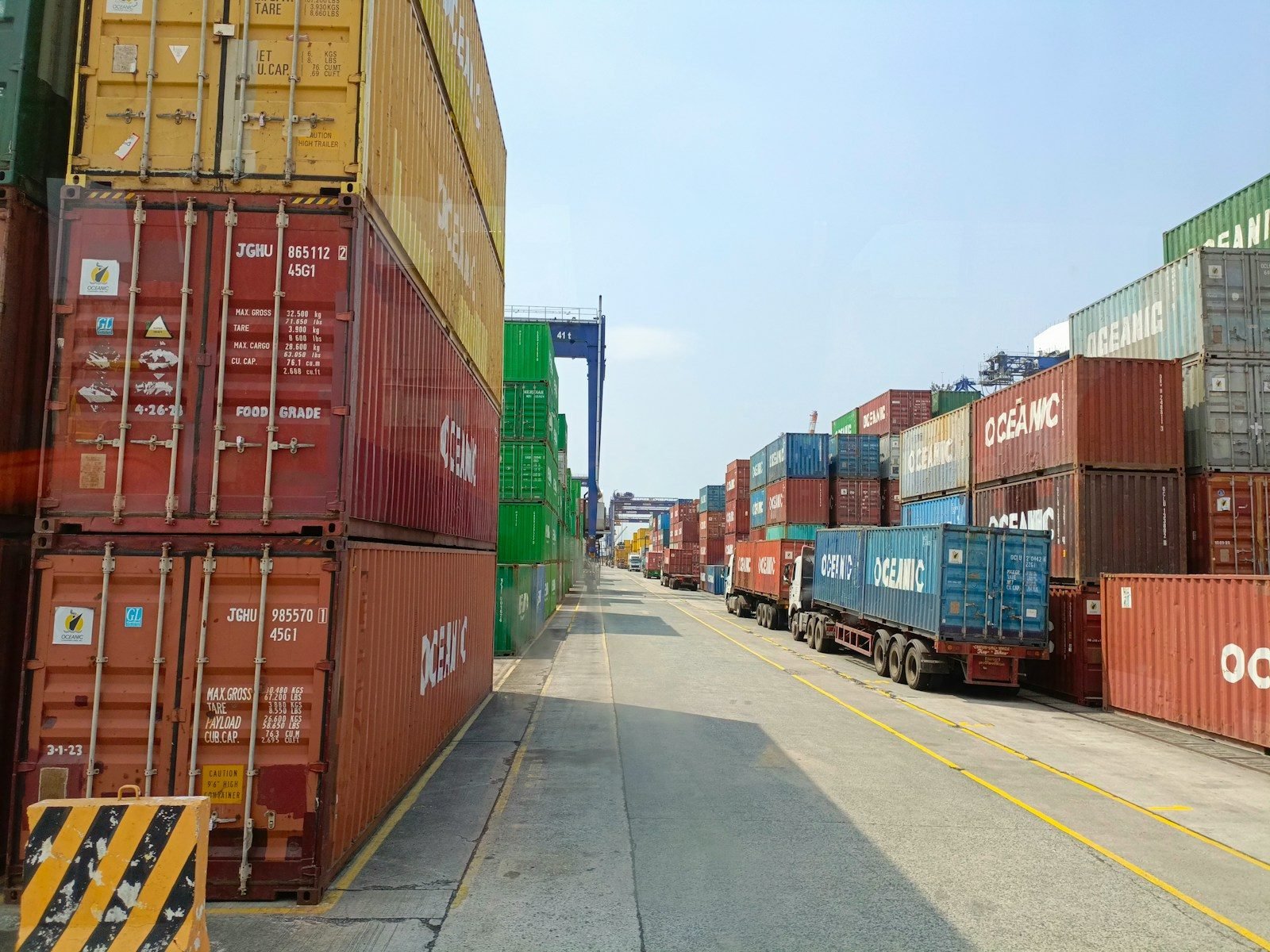
Complete guide to Iraq customs clearance: required documents, ASYCUDA filing, duty rates, port lead times, and how to avoid common import delays.
1. Executive Summary
Customs clearance in Iraq is governed by the Ministry of Finance and implemented digitally via the ASYCUDA World system. Clearing cargo through any Iraqi border port or airport requires a licensed customs broker, an official import license, and specialized pre-approvals from relevant ministries (such as Oil, Security, Agriculture, or Health) depending on the commodity type.
Key Facts About Iraq Customs Clearance:
- Clearance Lead Times:
- 1–3 Days: Standard/regular shipments with complete documentation.
- 5–7 Days: Complex shipments requiring secondary ministry approvals or lab testing.
- Customs Duty & Tariffs: Rates range from 1% up to 30% of invoice value depending on the product classification and 6-to-12-digit HS Code.
- Secondary & Inland Dry Port Inspections: Selected shipments may be routed to inland dry ports—such as DP Duhok or Abu Ghraib—for secondary verification, sampling, or physical customs inspection.
- Duty Exemptions & Project Cargo: Shipments holding official duty-exemption letters (e.g., registered Investment Law projects or humanitarian aid) pay 0% import duties, but remain subject to standard administrative, inspection, and port handling fees.
- Pharmaceutical & Medical Compliance: All medical imports require foreign manufacturers to hold active registration with KEMADIA (Federal Iraq) and KMCA (Kurdistan Medical Control Agency).
2. Core Documentation Checklist
Over 70% of cargo clearance delays in Iraq stem from missing, incomplete, or incorrectly translated documentation. Ensuring all documents are verified before shipment dispatch is critical.
Standard Shipping Documents (Required for All Shipments)
- Commercial Invoice: Must detail complete item descriptions, individual unit values, total CIF value, payment terms, and itemized 6-to-12-digit HS codes.
- Packing List: Must outline exact inner/outer package counts, piece types, total gross/net weight, and dimensional measurements per pallet/box.
- Approved Certificate of Origin (COO): Must be issued and authenticated by an authorized Chamber of Commerce in the exporting country and stamped/attested by the relevant Iraqi Embassy/Consulate.
- Transport Document (BL / AWB / CMR):
- Bill of Lading (B/L): For ocean freight imports via ports like Umm Qasr.
- Air Waybill (AWB): For air freight arrivals at BGW, EBL, or BSR airports.
- CMR (International Consignment Note): For overland road freight entering via border crossings.
Labeling & Language Compliance Requirements
- Language Requirements: All physical labels, outer shipping marks, product stickers, and accompanying cargo paperwork must be in Arabic or English. Arabic translations are required for official customs manifest submissions.
- Markings: Outer packaging must explicitly display the manufacturer’s name, country of origin, and destination address matching the COO and Invoice.
Importer Credentials & Sector-Specific Clearances
- Consignee Import License: Active commercial registration and valid Iraqi import license linked to the receiving entity.
- Sector-Specific Ministry Approvals: Special import authorizations required prior to clearance for regulated goods, including:
- Ministry of Oil: Chemicals, lubricants, heavy machinery, and specialized industrial tools.
- Ministry of Interior / Security: Telecommunications, dual-use equipment, surveillance systems, and dangerous goods.
- Ministry of Health: Medical devices, pharmaceuticals, and cosmetics.
- Ministry of Agriculture: Live animals, seeds, fertilizers, and raw food materials.
3. End-to-End Customs Clearance Workflow
Phase 1: Document Preparation & Pre-Arrival Setup
- Document Compilation: Secure the base cargo paperwork, including the Commercial Invoice, Packing List, and the Consignee’s active Import License and Ministry Approvals.
- Attestation & Digital COO Standard: The Certificate of Origin (COO) must be officially attested. Transitioning under the International Chamber of Commerce (ICC) digital verification platform, digital pre-approved e-COs with online verification protocols will streamline cross-border verification.
- Broker Authorization: Issue an official Customs Agent Power of Attorney (POA) empowering your licensed broker to act on behalf of the importer.
- ASYCUDA Pre-Arrival Filing: Electronically lodge cargo manifests, declarations, and document sets into Iraq’s digital ASYCUDA World portal prior to vessel/flight arrival.
- Labeling & Physical Marking Audit: Confirm that all outer box labels, product stickers, and pallet markings are compliant in Arabic or English to avoid physical hold-ups.
Phase 2: Arrival, Inspection & Entry Processing
- Advance Broker Notification: Send advance arrival notices to your customs broker to prepare for manifest processing and gate operations before cargo reaches the entry port.
- Paperwork Processing & Manifest Verification: Customs officers verify the physical and electronic filings against cargo manifests.
- Customs Inspection & Sampling: Cargo is directed through automated inspection routes (Green, Yellow, or Red Channel) for physical checking, weighbridge scans, or lab sampling depending on risk profiling.
Phase 3: Duty Settlement, Exit Permission & Secure Transit
- Payment of Duties & Taxes: Calculate and settle applicable customs tariffs, administrative fees, and taxes via electronic payment options integrated within ASYCUDA or authorized banking channels.
- Exit Permission Issuance: Once financial and document checks pass, customs generates the official Gate Pass / Exit Permit releasing the cargo from the port or border authority.
- High-Risk Cargo Monitoring & Escorts: For regulated sensitive commodities—such as pharmaceuticals, chemicals, or security-related items—the government may mandate official state escorts, specialized GPS tracking, and monitored warehouse storage protocols until final delivery to the consignee’s facility.
4. Major Ports & Customs Entry Points in Iraq
International Air Cargo Hubs
- Erbil International Airport (EBL): The primary air cargo hub serving the Kurdistan Region of Iraq.
- Baghdad International Airport (BGW): The main international gateway handling general commercial, government, and project air cargo for central Iraq.
- Basra International Airport (BSR): Key southern air freight hub servicing commercial cargo, oil and gas logistics, and energy sector operations.
Maritime Cargo Gateways
- Umm Qasr Port: The largest and primary commercial deep-water seaport in Iraq, handling the bulk of containerized, breakbulk, and heavy-lift ocean freight.
- Abu Fulus Port: A key commercial seaport located in Basra along the Shatt al-Arab waterway for regional short-sea cargo traffic.
- Grand Faw Port (Al-Faw): Iraq’s mega-port maritime development designed to enhance regional logistics trade routes connecting the Arabian Gulf to Europe.
Key Overland Border Crossings
- Turkey: Ibrahim Khalil – Primary northern land gate for European and Turkish commercial cargo entering Iraq.
- Syria: Rabia, Al-Walid, and Al-Qaim border points.
- Jordan: Trebil – Main western trade artery connecting Jordanian ports and Mediterranean freight lanes to Iraq.
- Saudi Arabia: Arar – Primary southwestern border crossing for land freight and trade between Saudi Arabia and Iraq.
- Kuwait: Safwan – Major southern land entry point connecting Kuwaiti commercial corridors directly to Basra and southern Iraq.
5. Preventing Delays: Top Causes & The Iconic Advantage
Common Causes of Import Delays in Iraq
- Incorrect HS Code Classification: Assigning incorrect Harmonized System codes leads to tariff miscalculations, duty disputes, and secondary manual customs audits.
- Invoice Number Discrepancies: Mismatches between the invoice number on the physical Commercial Invoice and the reference number on the Certificate of Origin (COO).
- Sticker & Labeling Non-Compliance: Missing production or expiration dates on physical inner/outer packaging, or listing an expiration window longer than allowed by Iraqi regulatory standards (especially strict for food items).
- Country of Origin Mismatch: Discrepancies between the physical origin markings on product labels/boxes and the official Certificate of Origin (COO).
- Exceeding Ministry Quotas: Importing cargo volumes or quantities higher than the pre-approved allocation permitted in the official ministry clearance letter (affecting Oil & Gas, Food, Medical, and Chemical sectors).
- Undeclared Security Restrictions: Shipping cargo that contains unannounced security-restricted technology (such as GPS trackers, surveillance cameras, satellite gear, or specialized wireless equipment) without prior Ministry of Interior clearance.
How Iconic Makes a Difference for Your Cargo
As experts in supply chain management, import/export regulations, and handling high-volume cargo across all major Iraqi land, sea, and air gateways, Iconic has implemented an operational framework to eliminate clearance risks:
- Pre-Arrival Verification System: A robust documentation audit process that verifies all cargo manifests, paperwork, and labeling before the shipment arrives at the border.
- Regulatory Compliance Desk: Continuous document checking against the most up-to-date Iraqi customs regulations and ministry directives.
- QA/QC Compliance Procedures: Multi-stage quality control checks to guarantee full adherence to national import laws and border requirements.
- Field-Experienced Customs Personnel: Daily direct involvement at border entry points keeps our team ahead of real-time operational shifts, positioning Iconic as an authoritative source of customs intelligence.
- Strict Standard Operating Procedures (SOPs): Operational rules designed to safeguard clients against supply chain disruptions, unexpected fines, or costly port demurrage.
6. Frequently Asked Questions (FAQ)
How long does customs clearance take in Umm Qasr Port?
Under normal circumstances, customs clearance at Umm Qasr Port takes 5 to 7 days. However, during operational bottlenecks, geopolitical crises, or port congestion, this timeframe can extend dramatically. For this reason, Iconic strongly recommends securing a minimum of 14 days of free demurrage/detention time when booking ocean shipments bound for Umm Qasr.
How long does customs clearance take at Erbil International Airport?
Air cargo clearance at Erbil International Airport (EBL) is extremely streamlined, taking a maximum of 6 hours for any shipment type provided all pre-arrival documentation and approvals are fully in place.
Can I get a DDP (Delivered Duty Paid) rate from Iconic?
Yes, Iconic offers both DDP (Delivered Duty Paid) and DAP (Delivered at Place) terms. However, the majority of our clients prefer DAP structures. DAP provides maximum financial transparency because customs duties are paid directly to the government against the actual verified customs invoice rather than being estimated in advance.
Do I need to translate all shipping documents into Arabic?
No. Translation is not required if your documents and labels are in English. However, if your shipping paperwork or product stickers are in any other language, you must provide certified translations into Arabic for both the documents and physical product labels.
What is the role of ASYCUDA in Iraqi customs?
ASYCUDA is an automated global customs software system deployed across Iraq to handle digital pre-declarations prior to cargo arrival. Importers and brokers use ASYCUDA to submit electronic documentation, obtain entry approvals, calculate tariffs, and regulate duty payments.
Who is responsible for submitting the ASYCUDA declaration?
The ASYCUDA declaration must be lodged by the Consignee or their designated Customs Broker/Agent who holds an active, legally registered Power of Attorney (POA).
Is a Certificate of Origin (COO) required for shipments coming to Iraq?
Yes, a Certificate of Origin is mandatory for all imports entering Iraq. Under the new digital framework implemented alongside International Chamber of Commerce (ICC) standards, the COO must be digitally pre-declared and validated within the system before arrival.
Does Iconic operate in all Iraqi and Kurdistan ports, airports, and border points?
Yes. Iconic maintains authorized customs agents, field teams, and operational staff across all land borders, seaports, and international airports in both Federal Iraq and the Kurdistan Region. Beyond core customs clearance and import paperwork processing, Iconic operates as a full 4PL logistics provider managing complex end-to-end supply chains and representing major international corporate clients, including energy and industry leaders such as NRCO.Published by Iconic – Top tier logistics service company in Iraq
This guide is published by ICONIC a top tier logistics service company based in Iraq. `