
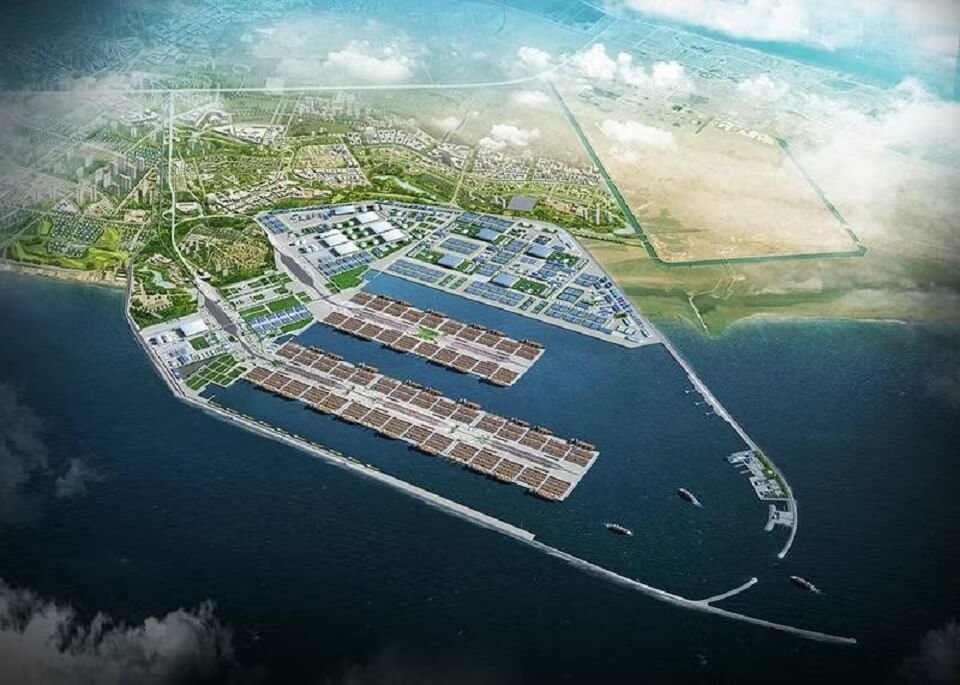
Al Faw Grand Port, located on the Arabian Gulf near Basra, is Iraq’s largest infrastructure project in decades and is scheduled to reach full commercial operations in 2026. With a planned total capacity of 25 million containers per year and 55 million tons of bulk cargo, it is set to become the primary maritime gateway for Iraq — and a direct alternative route for cargo moving between Asia, the Gulf, and Europe. For importers, exporters, and freight forwarders working in and out of Iraq and the Kurdistan Region, this is one of the most consequential developments in the country’s logistics landscape in a generation.
What Is Al Faw Grand Port?
Al Faw Grand Port sits in Iraq’s Al-Faw district in Basra Governorate, at the head of the Arabian Gulf. Construction began in 2010, led by South Korea’s Daewoo E&C on the engineering and construction side, with Italian consultancy Technital overseeing design quality. The project is backed directly by the Iraqi government and the General Company for Ports of Iraq (GCPI).
Key infrastructure includes:
- A 23 km navigation channel extending from Iraqi territorial waters into the port basin
- A 14.5 km western breakwater — a Guinness World Record holder as the longest breakwater in the world — working alongside an eastern breakwater to protect the port basin
- Container Terminal (A), designed for 3.5 million TEUs per year in its first phase
- A 62 km connecting road linking Al Faw Grand Port to Umm Qasr and Safwan, running through an immersed tunnel under the Khor Al-Zubair channel
- Five new berths, positioning the port as a global logistics hub from day one
At full build-out, the port’s masterplan targets 25 million containers per year and 55 million tons of bulk cargo capacity — figures that would place it among the largest ports in the region.
Current Status: Where Things Stand in 2026
As of early 2026, GCPI leadership confirmed the port had entered an advanced stage of preparation, with the navigation channel and main berths complete and the first trial vessels already received. Officials have stated full commercial operations are targeted for 2026, with international port operators shortlisted to manage Container Terminal No. 1 under a revenue-sharing model with the government. In parallel, the first section of the Development Road — the 62 km link between Al Faw Grand Port and Umm Qasr — has already been completed and passes through the port’s immersed tunnel.
For anyone planning freight movements into Iraq over the next 12–24 months, this means the port should be treated as an emerging option to factor into routing decisions now, not a distant future project.
Why Al Faw Grand Port Matters for Freight Forwarding
1. A new maritime gateway alongside Umm Qasr. Iraq’s container trade has long run almost entirely through Umm Qasr, which operates at or near capacity during peak periods. Al Faw Grand Port adds substantial new berth and yard capacity directly connected to Umm Qasr by road, reducing bottleneck risk and giving shippers more flexibility on port of entry.
2. A land bridge between Asia and Europe. Al Faw is the maritime anchor of the wider Development Road project — a corridor of roughly 1,200 km of road and rail intended to connect the Gulf to Turkey and on to Europe. For cargo moving between Asia and Europe, this positions Iraq as a potential overland alternative to the Suez Canal route, with Al Faw as the entry point.
3. Added resilience for Gulf shipping routes. Iraq’s exposure to Gulf chokepoints, including the Strait of Hormuz, has been a live operational concern for shippers this year. A second major Iraqi deep-water port with direct road connectivity into the country’s interior — and onward toward Turkey — gives forwarders another routing option to build contingency plans around, alongside existing corridors through Umm Qasr, Aqaba, and Mersin.
4. Direct relevance for oil & gas, FMCG, and industrial project cargo. The port’s design includes bulk and petroleum derivative handling alongside container capacity, which matters for the oil and gas sector’s equipment and materials flows, as well as bulk commodity importers.
What Shippers and Importers Should Do Now
- Track the operator award and opening timeline. Terminal management is being awarded to an international operator, which will shape service levels, shipping line calls, and tariff structures once live.
- Build Al Faw into routing contingency plans, particularly for cargo bound for southern and central Iraq, alongside existing Umm Qasr, Aqaba/Trebil, and Mersin corridors.
- Plan customs and inland transport in advance. New port infrastructure means new inland transport patterns — the Al Faw–Umm Qasr–Safwan road corridor will need to be factored into transit times and customs clearance planning.
- Work with a forwarder that already tracks Gulf routing options. As the port transitions from construction to commercial operation, service reliability and documentation requirements will evolve — a forwarder monitoring the port’s status directly is better placed to adjust routing on short notice.
FAQs
When will Al Faw Grand Port become fully operational? Iraqi officials have targeted full commercial operations for 2026, with the navigation channel and main berths already complete and trial shipping lines underway as of early 2026.
How big is Al Faw Grand Port compared to Umm Qasr? At full build-out, Al Faw Grand Port’s masterplan targets 25 million containers and 55 million tons of bulk cargo per year, substantially larger than Umm Qasr’s current capacity, making it Iraq’s primary planned deep-water port.
Does Al Faw Grand Port connect to Iraq’s land routes? Yes. A 62 km connecting road already links Al Faw Grand Port to Umm Qasr and Safwan through an immersed tunnel, and the port is the maritime anchor of the wider Development Road project linking the Gulf to Turkey and Europe.
What does Al Faw Grand Port mean for Kurdistan Region imports? Once operational, Al Faw offers an additional southern entry point for cargo destined for the Kurdistan Region, complementing existing routes through Umm Qasr and land corridors via Turkey and Jordan — giving forwarders more options to manage transit time and cost.
How Iconic Can Help
As Al Faw Grand Port moves from construction into commercial operation, routing options into Iraq and the Kurdistan Region are changing. Iconic provides air, land, and sea freight forwarding, customs clearance, project cargo, and supply chain management across Iraq, with routing expertise spanning Umm Qasr, Aqaba/Trebil, and Mersin corridors. As Al Faw comes online, we’re tracking its operator award, opening timeline, and inland transport links directly, so your shipments are routed through whichever gateway offers the best combination of cost, transit time, and reliability.
Get in touch to discuss routing options for your next shipment: info@iconic-ltd.net | +964 750 946 1950