
By the Iconic Logistics Team | Updated September 10, 2026
Executive Summary & Key Takeaways
- Primary Routing Driver: Disruptions to commercial maritime lanes through the Strait of Hormuz have pushed regional shippers to rely on Red Sea and Mediterranean entry ports for Iraq-bound containerized cargo.
- Transit Surge Data: Aqaba Container Terminal (ACT) recorded a 155.1% YoY surge in transit volumes during H1 2026, driven primarily by cross-border trucking into Iraq.
- Core Route Metrics: The Aqaba–Trebil corridor features a 760 km overland journey from port to border, yielding an average China-to-Iraq lead time of 55–60 days.
- Strategic Fit: Aqaba serves as an alternative for Central & Western Iraq (Baghdad, Anbar), while Mersin targets the Kurdistan Region, and Umm Qasr directly serves Southern Iraq.
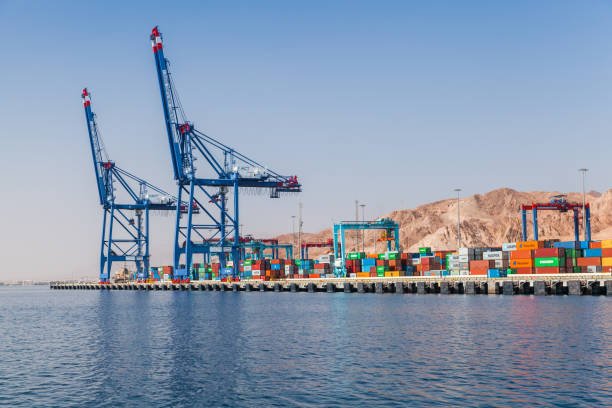
Aqaba, Jordan has emerged as one of the most critical alternative gateways for containerized cargo bound for Iraq in 2026. Disruptions to commercial shipping through the Strait of Hormuz have encouraged shippers to reroute cargo that previously moved through Iraq’s southern Gulf ports. Increasing volumes are now discharged at Aqaba and transported approximately 760 km by road through the Karameh–Trebil border crossing into Iraq.
For importers moving goods from China, Europe, and the United States, the Aqaba–Trebil corridor has become a core transit pipeline alongside established routes via Umm Qasr and Mersin.
Why Aqaba Has Become More Important for Iraq Shipments
The shift toward Aqaba is driven by regional security conditions, port throughput efficiency, and the necessity for diversified supply lines.
1. Disruption Around the Strait of Hormuz
The escalation of conflict in early 2026 significantly disrupted commercial shipping through the Strait of Hormuz. The resulting security concerns reduced the operational predictability of routes serving Iraq’s southern Gulf ports.
This environment led importers and logistics providers to adopt gateways that bypass the Hormuz chokepoint entirely. Aqaba offers a direct Red Sea ocean leg, allowing cargo to transition to road transport before entering Iraq.
2. Sharply Increased Transit Volumes
The Aqaba Container Terminal (ACT) reported that transit cargo volumes surged 155.1% during H1 2026 compared to the same period in 2025. According to reporting from Reuters, expanded trucking capacity to Iraq was a primary driver of this growth.
This increase highlights Aqaba’s role not just as a domestic port, but as a regional transit gateway where Iraq-bound freight forms a significant operational component.
3. Overland Corridor Mechanics (Bypassing Maritime Bottlenecks)
Cargo arriving at Aqaba is discharged and transferred directly to long-haul trucks. The physical route moves along the following pipeline:
$$\text{Aqaba Container Terminal (ACT)} \longrightarrow \text{Karameh Border Crossing (Jordan)} \longrightarrow \text{Trebil Border Crossing (Iraq)} \longrightarrow \text{Inland Destination (Highway 1)}$$
From Aqaba, the road journey to the border is approximately 760 km (cited by port officials via Reuters). Ocean legs terminate at the Red Sea, while remaining transit is executed overland.
How the Aqaba–Trebil Route Works
The end-to-end multi-modal routing follows a six-step process:
- Origin Consolidation: Container loading at origin ports across East Asia, Europe, or North America.
- Ocean Freight to Jordan: Maritime transport terminating at Aqaba Container Terminal (Port Code: JOAQB).
- Discharge & Inland Transfer: Customs release for transit cargo and offloading to cross-border trucking fleets.
- Karameh–Trebil Border Processing: Exit procedures through Karameh (Jordanian side) and entry processing at Trebil (Iraqi side).
- Iraqi Customs & Onward Trucking: Final customs clearance and dispatch via Iraq’s Highway 1 network.
- Final Delivery: Direct delivery to commercial hubs in Baghdad, Erbil, Basra, or Anbar.
Gateway Comparison: Aqaba vs. Umm Qasr vs. Mersin
Selecting the optimal gateway depends on destination, cargo type, origin port, and real-time border conditions.
| Gateway Route | Key Border Entry | Indicative Lead Time (China to Iraq) | Primary Destination | Maritime Chokepoint Risk |
| Aqaba (Jordan) | Karameh–Trebil | 55–60 days | Central & Western Iraq (Baghdad, Anbar) | Bypasses Strait of Hormuz |
| Umm Qasr (Iraq) | Direct Maritime Entry | 45–50 days (subject to delays) | Southern Iraq (Basra, Thi Qar) | High (Transits Strait of Hormuz) |
| Mersin (Turkey) | Ibrahim Khalil / Rabia | 65–70 days | Kurdistan Region (Erbil, Sulaymaniyah, Duhok) | Bypasses Strait of Hormuz |
Source: Iconic Logistics operational data (August 2026). Actual transit times vary by carrier schedules, customs clearance performance, and border queues.
Trade-off Breakdown by Corridor
Aqaba–Trebil Corridor
- Best For: Central and Western Iraq (particularly Baghdad and Anbar).
- Advantages: Avoids Persian Gulf maritime risks; direct access to Western Highway corridors; reliable secondary option during Gulf congestion.
- Considerations: Requires 760 km long-distance trucking; overland transport costs fluctuate with regional fuel and truck availability.
Umm Qasr Gateway
- Best For: Heavy industrial equipment and direct deliveries into Southern Iraq.
- Advantages: Direct maritime entry without land-border crossings; shortest distance to Basra industrial zones.
- Considerations: Direct exposure to Strait of Hormuz disruptions; port congestion can extend total vessel wait times.
Mersin Gateway
- Best For: Northern Iraq and the Kurdistan Regional Government (KRG) territory.
- Advantages: Established Mediterranean feeder network; integrated with modern digital clearance systems like ASYCUDA at the Ibrahim Khalil crossing.
- Considerations: Longer sea routes from Asian origin ports; occasional seasonal border congestion in Northern Iraq.
Route Selection Strategy for Importers
Evaluating a route based solely on map distance can be misleading. Importers should analyze the total door-to-door chain:
$$\text{Origin Port} \longrightarrow \text{Ocean Leg} \longrightarrow \text{Discharge Port} \longrightarrow \text{Inland Transport} \longrightarrow \text{Border Customs} \longrightarrow \text{Final Destination}$$
A route with a shorter maritime distance may experience delays if the discharge port faces vessel congestion or border checkpoints encounter administrative backlog. Dynamic routing based on real-time operational conditions yields higher delivery reliability than relying on a single static corridor.
How Iconic Logistics Manages Iraq Supply Chains
Iconic Logistics monitors regional transit corridors to assist importers in selecting the optimal route based on active market conditions.
Core Freight Services
- Door-to-door transit via the Aqaba–Trebil corridor.
- Cross-border trucking and bonded transit management.
- Comprehensive Iraq customs clearance services.
- Final-mile containerized transport to Baghdad, Erbil, Basra, and regional destinations.
- Dynamic rerouting strategies when maritime or border conditions shift.
For documentation guidelines, consult our Iraq Customs Clearance Guide 2026. For Northern trade corridors, review our operational analysis on ASYCUDA Modernization at Ibrahim Khalil and Rabia.
Frequently Asked Questions
Why is Aqaba an important gateway for shipments to Iraq in 2026?
Aqaba serves as an alternative entry point that bypasses the Strait of Hormuz. Following regional security disruptions in early 2026, transit volume through Aqaba Container Terminal grew by 155.1% in H1 2026, primarily driven by Iraq-bound overland freight.
What is the distance from Aqaba to the Iraqi border?
The road distance from Aqaba Container Terminal to the Karameh–Trebil border crossing is approximately 760 km.
What is the average transit time from China to Iraq via Aqaba?
Based on Iconic Logistics operational data from August 2026, lead times from major Chinese ports to central Iraqi destinations via Aqaba range between 55 and 60 days.
Is Umm Qasr Port still operational for Iraq imports?
Yes. Umm Qasr remains operational and is the primary port for Southern Iraq. However, shippers frequently utilize Aqaba or Mersin when maritime conditions in the Persian Gulf experience delays.
Which route is better for shipping to Erbil and Northern Iraq?
Mersin (Turkey) remains the primary gateway for Northern Iraq and the Kurdistan Region due to its proximity to the Ibrahim Khalil border crossing, despite having an average lead time of 65–70 days from China.