
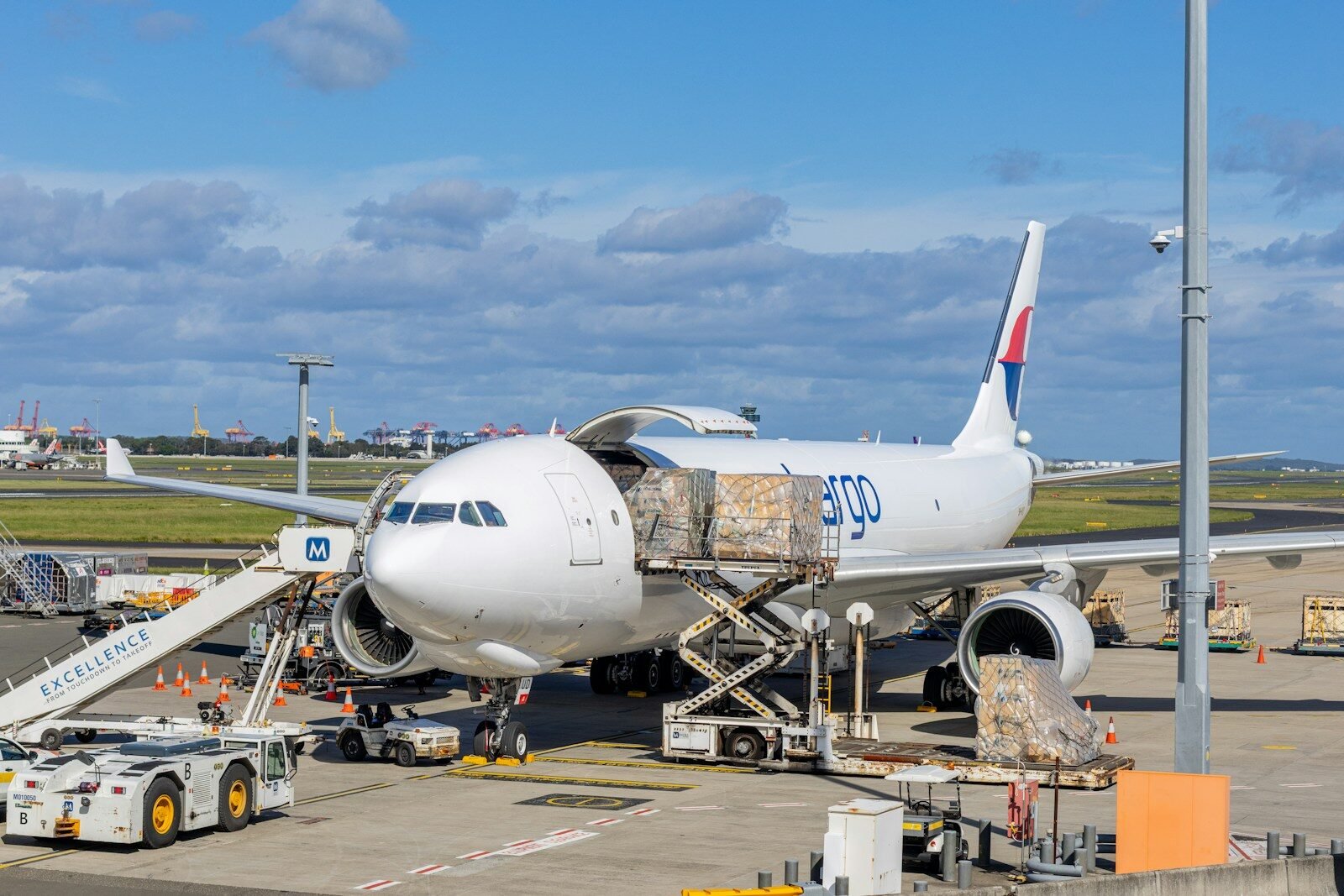
Chargeable weight is the higher of two numbers — a shipment’s actual scale weight, or its volumetric (dimensional) weight calculated as (Length x Width x Height in cm) / 6000. Carriers bill on whichever figure is greater, so bulky, light cargo often costs more to fly than its scale weight suggests.
Last updated: August 2026. Reviewed by Iconic’s air freight operations team.
Key Takeaways
- Air carriers charge by chargeable weight, not actual weight alone
- Chargeable weight = the higher of actual weight vs volumetric weight
- Standard IATA divisor: 6000 (some couriers use 5000, which costs more)
- Dense cargo favors actual weight; bulky/light cargo triggers volumetric weight
- Confirm dimensions before booking to avoid invoice surprises
Most first-time air freight shippers get quoted a price that doesn’t match what they expected — because carriers don’t always bill by the kilo on the scale. They bill by whichever is higher: actual weight or volumetric (dimensional) weight. That number is called the chargeable weight, and it’s the real driver of your air freight cost.
What Is Actual Weight?
Actual weight is simple — it’s what the shipment weighs on a scale, including packaging and pallet. No calculation needed.
What Is Volumetric (Dimensional) Weight?
Volumetric weight estimates how much space a shipment takes up on the aircraft, converted into an equivalent weight. Air freight space is limited, so a large, light shipment (foam packaging, textiles, empty-looking crates) can cost more to fly than a small, dense one — because it’s blocking space other cargo could use.
Standard IATA formula (metric):
Volumetric Weight (kg) = (Length x Width x Height in cm) / 6000
For multiple pieces, calculate each piece separately and sum the totals.
How Chargeable Weight Is Determined
The carrier compares actual weight against volumetric weight and charges based on whichever number is greater.
Example: A crate measures 120 cm x 100 cm x 80 cm and weighs 150 kg actual.
- Volumetric weight = (120 x 100 x 80) / 6000 = 160 kg
- Actual weight = 150 kg
- Chargeable weight = 160 kg (volumetric wins)
Here, you pay for 160 kg even though the crate weighs 150 kg on the scale — because it’s taking up more space than its weight justifies.
Flip the scenario: a dense machinery part weighing 300 kg in a compact 80 cm x 60 cm x 50 cm crate.
- Volumetric weight = (80 x 60 x 50) / 6000 = 40 kg
- Actual weight = 300 kg
- Chargeable weight = 300 kg (actual wins)
Why the /6000 Divisor Matters
IATA’s standard divisor is 6000 for air freight, as set out in IATA’s Air Cargo Tariff and Rules Handbook. Some couriers and express services use 5000 — which produces a higher volumetric weight and therefore a higher price for the same box. Always confirm which divisor your forwarder or carrier is applying before comparing quotes.
Real-World Cost Impact
A rate of $4/kg applied to the two examples above shows how much the divisor and cargo density change the final invoice:
| Shipment | Actual Weight | Volumetric Weight | Chargeable Weight | Cost at $4/kg |
| Light crate (120x100x80cm) | 150 kg | 160 kg | 160 kg | $640 |
| Dense machinery (80x60x50cm) | 300 kg | 40 kg | 300 kg | $1,200 |
Same rate per kilo, very different pricing logic — the light crate pays a volumetric penalty, the dense crate pays full actual weight.
How to Reduce Chargeable Weight
- Right-size packaging. Oversized crates or excess dunnage inflate volumetric weight without adding value.
- Consolidate shipments. Combining multiple small, low-density pieces into one optimized load can improve the weight-to-volume ratio.
- Choose sea or land freight for low-density, non-urgent cargo. If a shipment is bulky but not time-critical, ocean or land freight avoids the volumetric penalty entirely.
- Get dimensions confirmed before booking. A forwarder should calculate chargeable weight up front, not after loading — surprises at that stage mean surprise invoices.
Actual Weight vs Volumetric Weight: Quick Comparison
| Factor | Actual Weight | Volumetric Weight |
| Based on | Scale reading | Length x Width x Height |
| Formula | N/A | (L x W x H in cm) / 6000 |
| Favors | Dense, compact cargo | N/A — this is the cost driver for bulky cargo |
| Penalizes | N/A | Light, bulky, poorly packed cargo |
| Set by | Physical measurement | IATA standard (some couriers use /5000) |
Frequently Asked Questions
What is chargeable weight in air freight? Chargeable weight is the weight a carrier bills for — whichever is higher between actual weight and volumetric weight.
What is the standard volumetric weight formula? Under IATA guidelines, volumetric weight (kg) = (Length x Width x Height in cm) / 6000. Some express couriers use a /5000 divisor instead, which produces a higher — and more expensive — result.
Does volumetric weight apply to sea or land freight too? Sea freight uses a different volumetric conversion (typically 1 CBM = 1,000 kg equivalent for pricing comparisons). Land freight is usually priced by actual weight, space used, or a flat truck/consolidation rate rather than a dimensional formula. Air freight is the mode where volumetric weight most commonly decides the final price.
How can I lower my chargeable weight before booking? Right-size packaging, remove excess dunnage, consolidate multiple pieces where possible, and get your forwarder to calculate chargeable weight from confirmed dimensions before booking — not after the cargo is already palletized.
Who sets the volumetric weight formula? The International Air Transport Association (IATA) sets the standard /6000 divisor used across most commercial air cargo. Forwarders and airlines are expected to apply it consistently, though express couriers sometimes vary.